


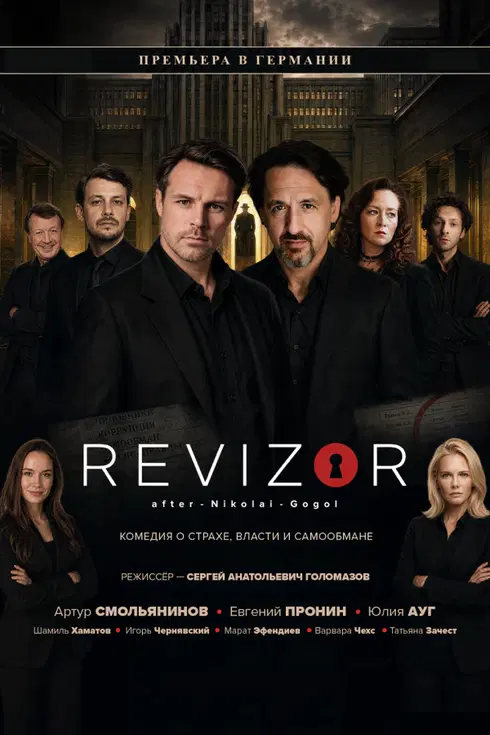
24 November 2026, 19:00 · Sartory Säle (Ostermann Saal) · Doors open 18:00
All tour datesSergei Golomazov’s “The Inspector General” in Germany – Köln, November 24, 2026
Performances of Sergei Golomazov’s new play *The Inspector General*, based on Nikolai Gogol’s famous comedy, will take place in Germany. This is a contemporary theatrical interpretation of the classic work—a psychological story about the fear of exposure, self-deception, and the human capacity to believe in convenient lies.
Buy tickets
24.11.26-Köln, Sartory Säle (Ostermann Saal)
Add to calendar

59-149 €
Related events


The therapeutic comedy "Sunline" in Spain

The Play "GROMKIE" in Europe

Show performance "Men Don't Striptease" in Germany
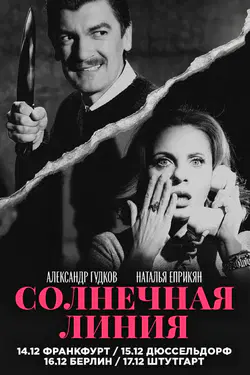
The therapeutic comedy "Sunline" in Germany

A Comedy Bachelorette Party in Spain
Performances of Sergei Golomazov’s new play *The Inspector General*, based on Nikolai Gogol’s famous comedy, will take place in Germany. This is a contemporary theatrical interpretation of the classic work—a psychological story about the fear of exposure, self-deception, and the human capacity to believe in convenient lies.
The action of the play is set in the present day—in a modern city literally riddled with surveillance cameras. It seems impossible to hide anything here: everyone is being watched, everything is recorded, and any secret could be exposed. But the more information there is all around, the harder it sometimes is to see the real truth.
At the center of the story is Khlestakov, who, in Sergei Golomazov’s production, is portrayed not as a mere windbag, but as a vivid, spirited, and dangerously charming man who knows how to turn fantasy into a weapon. He instantly recognizes the fears and desires of those around him and begins to create a new reality around himself.
Gradually, his lies grow bolder—and take over an entire city. But is Khlestakov really deceiving those around him? Or are they themselves willing to believe what they fear or what they desire?
Each character sees something different in the supposed inspector: a threat, an opportunity, a path to power, or salvation from their own problems. As a result, people become hostages not so much to someone else’s lies as to their own perceptions and fears.
Sergei Golomazov’s *The Inspector General* is a play about the mechanisms of self-deception and why people sometimes prefer a convenient lie to the obvious truth.
Nearly two hundred years have passed since Gogol’s *The Inspector General* was written. Technology, methods of observation, and the very reality around us have changed. But people have remained the same—they are still capable of seeing not what is right before their eyes, but what they want or are afraid to believe.